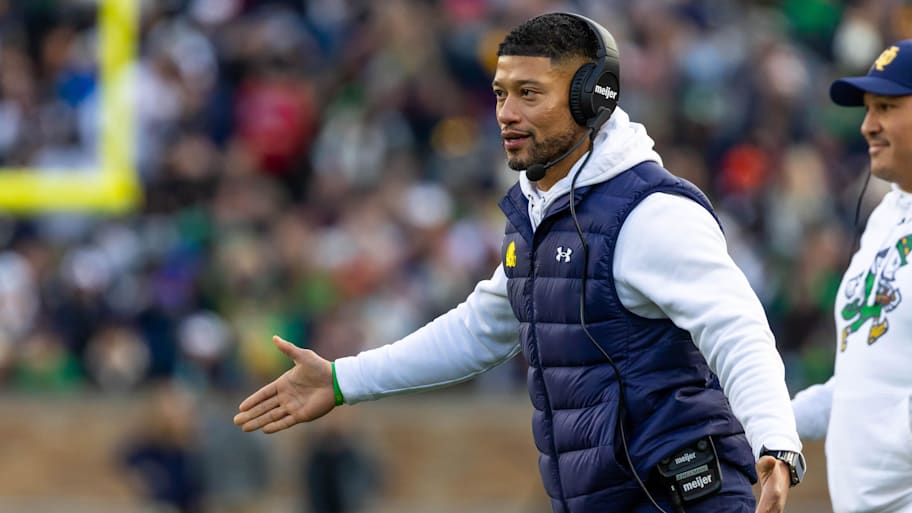
After weeks of debate, and plenty of controversy, the College Football Playoff field is here. As the 12 teams that will compete for the national championship were unveiled, the first eight were relatively chalky, with Indiana’s win over Ohio State leading to a swap of No. 1 and No. 2, and the rest staying in place from a week ago.
No. 9 also stayed in place, and that is where things got wild. Alabama, despite a 21-point SEC championship loss to Georgia that looked even worse than that, stayed pat in that spot, earning a spot in the field. At No. 10, Miami jumped over Notre Dame on the strength of a head-to-head win in Week 1, despite the selection committee’s reluctance to put the Hurricanes ahead of the Fighting Irish to this point.
Dating back to the first-ever College Football Playoff field, in which Ohio State dominated Wisconsin in the Big Ten championship and leapfrogged both TCU and Baylor to earn the No. 4 seed, controversy is baked into the process. More often than not, there is heated debate among the last few teams in the field, and the weeks of Miami vs. Notre Dame debate—which got even hotter as many argued against Alabama being in the mix after Saturday’s SEC championship—made 2025’s rankings among the most contentious yet.
Ultimately, the Fighting Irish are the program left out with the most compelling case to have made the field, that didn’t stop others on the outside looking in for posing their best arguments in the lead-up to Sunday’s bracket reveal. Here are the cases for each of the top teams on the outside looking in.
No. 11 Notre Dame (10–2)
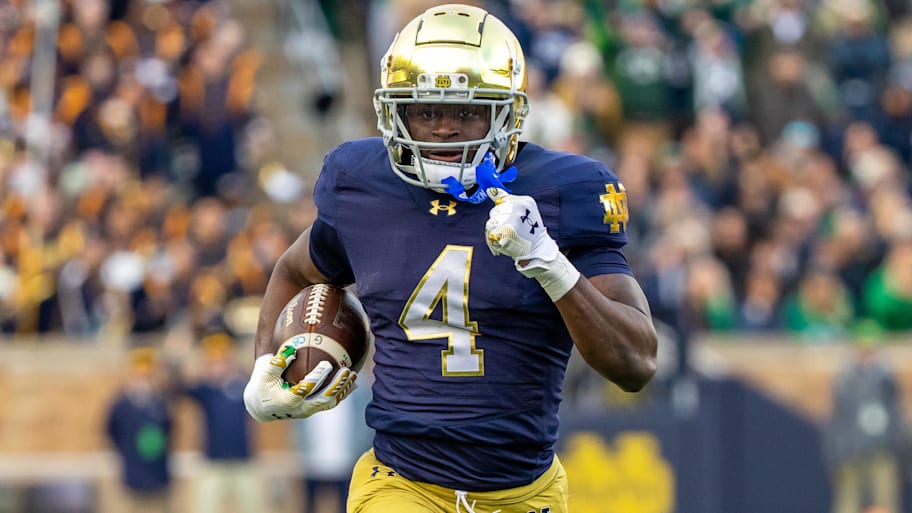
Biggest wins:
*All rankings are from the final CFP Top 25 released by the selection committee
- Sept. 27: at Arkansas, 56–13
- Oct. 18: vs. No. 16 USC, 34–24
- Nov. 15: at Pitt, 37–15
Losses:
- Aug. 31: at No. 10 Miami, 27–24
- Sept. 13: vs. No. 7 Texas A&M, 41–40
After weeks of dithering on the issue, the selection committee did the right thing and moved Miami past Notre Dame on the strength of their head-to-head victory all the way back in Week 1. The advanced metrics that the committee uses favor Notre Dame, and given the Fighting Irish’s 10-game winning streak, their pair of one and three-point losses to CFP teams (and Miami’s midseason swoon), it is fair to believe that Notre Dame is the better team today, but in a tight debate between teams with the same record and similar résumé, head-to-head has to be the biggest factor.
Notre Dame’s vitriol should not be directed toward the team it lost to, but instead toward a team that got blown out in its conference title game, has a pair of recent losses (including the only loss of any CFP team to a program that finished under .500 on the season) and is generally entering the postseason in pretty poor form: Alabama.
While the Fighting Irish have looked untouchable since their game against Texas A&M (granted, against a relatively middling schedule), since an impressive 37–20 win over Tennessee on Oct. 18, Alabama:
- was outgained by a South Carolina team that finished 4–8, winning by just a touchdown.
- won a 20–9 slog against an LSU team that had already fired its coach, being held to 2.2 yards per carry.
- lost to Oklahoma despite outgaining the Sooners by nearly two yards to one.
- beat 3–9 FCS program Eastern Illinois.
- blew a 17-point lead to 5–7 Auburn, hanging on to win by a touchdown.
- was uncompetitive in the SEC championship against Georgia.
In the same time frame, Notre Dame had a point differential of +168, winning games by an average of 33.8 points. It did not play teams the caliber of Oklahoma or Georgia, but had Alabama handled business more convincingly against the Gamecocks and Tigers (both LSU and Auburn), there wouldn’t be nearly as much outcry, even with a blowout loss to Georgia.
Alabama is the first three-loss team to make it, and two of those three losses were ugly. The three losses came by 37 total points. Oregon, Ole Miss and Texas A&M lost by 10, eight and 10 points in their single losses, respectively. Oklahoma’s pair of losses came by 25 points. Miami’s were by nine total points and Notre Dame, on the outside looking in, lost two games by four total points.
In Alabama’s distributed talking points—a clear sign that the program knew it was in trouble—it mentioned, among other things, injured players who will be back for the CFP. The argument is that the Crimson Tide team that showed up in Atlanta isn’t quite the same that will now face Oklahoma in a rematch in a few weeks. The tape and numbers show a team with some serious issues that aren’t merely a result of injuries or a small slump. Most notably, Alabama just cannot run the ball at all, averaging just 3.6 yards per carry on the season. Against Power 4 opponents, the win over Auburn was the only game in which the Tide averaged above four yards per carry (4.2, 158 yards on 38 carries). They were outrushed in eight of their 11 games against P4 opponents, putting increased strain on quarterback Ty Simpson as the season has worn on.
Notre Dame is the far more balanced team, with one of the nation’s top freshman quarterbacks C.J. Carr and a Heisman-caliber running back in Jeremiyah Love.
The Fighting Irish were ultimately left out because of their Week 1 loss to Miami. The selection committee appropriately weighed that late August game to make a difficult decision for the final at-large spot. The Crimson Tide’s noncompetitive Week 1 loss to Florida State, a team that finished 5–7 on the year, did not seem to factor in the same way.
No. 12 BYU (11–2, 8–2 Big 12)
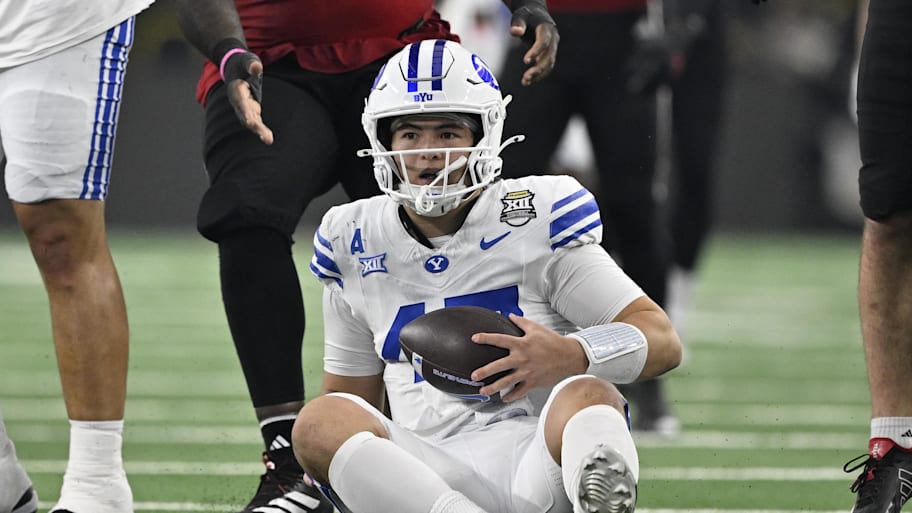
Biggest wins:
- Oct. 11: at No. 17 Arizona, 33–27 (2OT)
- Oct. 18: vs. No. 15 Utah, 24–21
- Nov. 15: vs. TCU, 44–13
Losses:
- Nov. 8: at No. 4 Texas Tech, 29–7
- Dec. 6: vs. No. 4 Texas Tech, 34–7 (in Arlington, Texas—Big 12 championship)
Had BYU not faced Texas Tech in the regular season and lost a game to one of the other ranked teams in the Big 12 in early November, the Cougars may have posed a bigger threat to stay ahead of Miami and Notre Dame. Unfortunately, the sport’s unbalanced scheduled led to a pair of games between BYU and a powerhouse Texas Tech program that outclassed them each time.
Was that enough to cross off BYU is a legitimate national title contender? To Cougars coach Kalani Sitake, it wasn’t, given just how strong he feels the Red Raiders are:
"Who's played the best team in the country twice? We have... everybody else will find out... I'd love to have a third chance at them."
— FOX College Football (@CFBONFOX) December 6, 2025
More from BYU head coach Kalani Sitake on Texas Tech after their second loss to the Red Raiders this season. pic.twitter.com/X4ktkRygCs
“I think if you look at what Texas Tech’s done, they’re the best team in the country for a reason,” Sitake said after Saturday’s loss. “Their only loss came when they didn’t have their starting quarterback, so that’s difficult, and on the road. But you look at when they’re a full-strength team, they’re dangerous. So I’m not on the playoff committee, but I can tell you one thing: Who’s played the best team in the country twice? We have. Does that mean you’re not one of the best 12? I have no idea, I’m not in that committee, I don’t make those decisions. But others will find out, that’s the great thing about the playoffs, everybody else will find out what we had to go against. ... I’d love to have a third chance at it.”
It’s a fair argument. Add in the idea that the conference championship games shouldn’t hurt a program (a flimsy argument at best—and one that the committee clearly uses selectively, based on treatment of Alabama and BYU on Sunday), and the Cougars have a real case here.
Some of the numbers used by the committee also favor BYU over other teams on the bubble, specifically strength of record. The Cougars finished ninth in that rating, per ESPN, with the eight teams above them finishing as the top-eight teams in the CFP field. Below BYU in SOR: Alabama, Vanderbilt, Notre Dame, Texas and Miami, who finished 10th through 15th.
Objectively, how do you defend this:
— BYU Cougars (@BYUCougars) December 7, 2025
Miami (10–2)
– ESPN SOS: 45
– ESPN SOR: 14
– Did not play for a conference championship
– Losses: Two 8–4 teams (SMU, Louisville)
BYU (11–2)
– ESPN SOS: 22
– ESPN SOR: 9
– Played in the Big 12 championship
– Losses: No. 4 Texas Tech on the…
No. 13 Texas (9–3, 6–2 SEC)
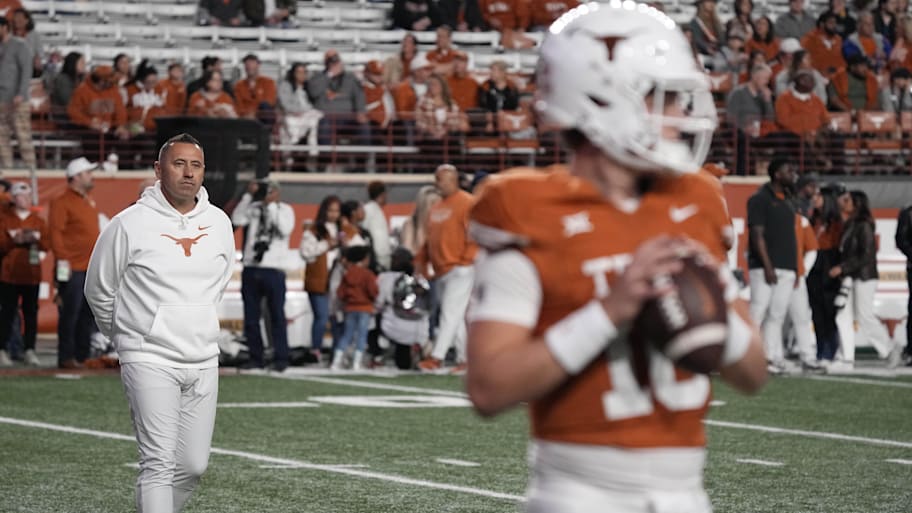
Biggest wins:
- Oct. 11: vs. No. 8 Oklahoma, 23–6 (in Dallas)
- Nov. 1: vs. No. 14 Vanderbilt, 34–31
- Nov. 28: vs. No. 7 Texas A&M, 27–17
Losses:
- Aug. 30: at No. 2 Ohio State, 14–7
- Oct. 4: at Florida, 29–21
- Nov. 15: at No. 3 Georgia, 35–10
The three biggest wins on Texas’s résumé—as well as the three losses that ultimately kept them out of the field by a few spots—lay bare what this program is in 2025. At its best, the Longhorns can beat anyone—and dominant wins against Oklahoma and Texas A&M show that they can win those game decisively.
Steve Sarkisian passionately argued his team’s case after its win against the Aggies to end the season:
"It would be a disservice to our sport if this team is not a playoff team."
— ESPN (@espn) November 29, 2025
Steve Sarkisian made his case for why No. 16 Texas should be in the College Football Playoff 😤 pic.twitter.com/bMjcBv5waf
“If you really look at the body of work, and you look at the Southeastern Conference and what we have to go through every week, you look at the nonconference schedule we played—go to Ohio State in Week 1 and lose by seven when we outgained them by nearly 200 yards. We got a really good football team,” Sarkisian said. “It would be a disservice to our sport if this team’s not a playoff team when we went and scheduled that nonconference game. ‘Cause if we’re a 10–2 team, its not a question. But we were willing to go play that game. So is that what college football’s about, don’t play anybody and just have a good record? Or play the best and put the best teams in the playoff, and we’re one of the best teams.”
The selection committee’s goal is to find the best, and not most deserving teams. That much was made clear in 2023, with the exclusion of undefeated Florida State after the injury to Jordan Travis, and while that decision remains deeply controversial, in terms of “best team,” the Seminoles’ blowout bowl loss to Georgia helped sell the committee’s decision.
At their best, the Longhorns are probably in that discussion. Texas’s case as a snub may be the hardest to defend, because Texas was at its best so infrequently this season. Even beyond the three losses, Sarkisian’s team did not impress in a sloppy 17-point win over UTEP, in overtime wins at Kentucky and Mississippi State—two of the SEC’s weakest teams—in a near-collapse against Vanderbilt. Against the best team on its schedule, Georgia, Texas was blown out, even if that game was a bit closer than the final score felt. And ultimately, it was a loss to 4–8 Florida, and not a tight game at Ohio State, that doomed the Horns.
If good wins so vastly outweighed losses, it would be hard to beat Texas’s résumé, but the selection committee signaled just how much it values competitive losses this season, and with three losses and a set of metrics that otherwise fall behind this year’s three-loss playoff squad Alabama, Sarkisian & Co. find themselves bowl bound instead of CFP-bound.
No. 14 Vanderbilt (10–2, 6–2 SEC)
Biggest wins:
- Oct. 18: vs. LSU, 31–24
- Oct. 25: vs. Missouri, 17–10
- Nov. 29: at Tennessee, 45–24
Losses:
- Oct. 4: at No. 9 Alabama, 30–14
- Nov. 1: at No. 13 Texas, 34–31
Admittedly, Notre Dame had by far the best case for inclusion among the programs left out of this year’s playoff. In other years, with fewer weak conference schedules across the country, a two-loss team in the Big Ten or SEC will likely be in great shape to reach the CFP. That was not the case this season, as we learned from BYU and Vanderbilt.
Vanderbilt, meanwhile, was blocked by its head-to-head losses to Alabama and Texas, a three-loss team that finished No. 13, one spot ahead of the Commodores. The 30–14 loss to the Crimson Tide is difficult to overcome, but Texas was nearly an epic comeback, with the Dores ultimately falling 34–31 in Austin.
I've heard it all today.
— Clark Lea (@Coach_Lea) December 7, 2025
I’ve watched it all today.@VandyFootball deserves a chance to be in the @CFBPlayoff.
You can try to talk your way into whatever you want. A 10-2 SEC team, playing its best football late. With the best offense in the country. With the best Quarterback…
The advanced metrics pretty bullish on Vandy’s case, especially compared to other teams on the bubble and another program that has largely escaped scrutiny despite entering the CFP in pretty ugly form: No. 8 Oklahoma. In its most recent update, ESPN’s SP+ has Vanderbilt ranked No. 11, ahead of Alabama (No. 12), Oklahoma (No. 13), BYU (No. 14) and Texas (No. 22). Football Power Index has Vandy at No. 14, ahead of Oklahoma and BYU. The Sagarin rating system has Vandy at No. 11, ahead of Texas (No. 12) and, again, Oklahoma (No. 13).
Ultimately there are only so many spots to go around and Vanderbilt was among the glut of two- and three-loss teams in the mix, but the Commodores had only one bad performance this season (against an Alabama team that the selection committee evidently thinks highly of) and played good football down the stretch, capped by a statement win at Tennessee, 45–24, a result that knocked the Vols out of the committee’s rankings, and thereby stripping Vanderbilt of its only ranked win. If only Diego Pavia & Co. had kept it closer ...
More College Football on Sports Illustrated
Listen to SI’s new college sports podcast, Others Receiving Votes, below or on Apple and Spotify. Watch the show on SI’s YouTube channel.
This article was originally published on www.si.com as The Case for Notre Dame and Three Other Teams Left Out of College Football Playoff.